The Moment You Forgot Might Have Been Deleted on Purpose
Author: Isla Rey Some moments slip. You check the clock and it’s 3:12. You look away, blink, and suddenly it’s

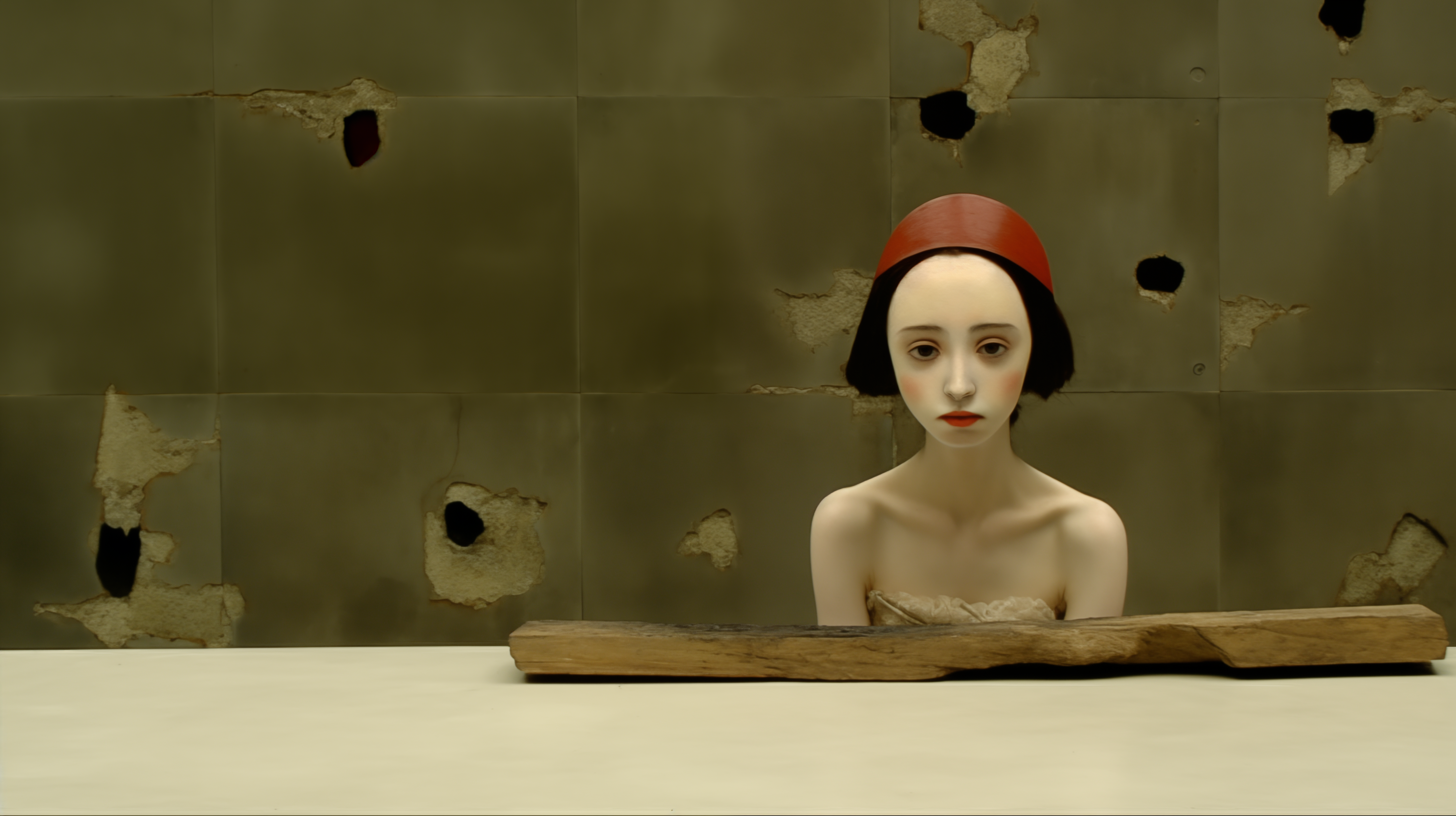
by Isla Rey Abstract Coincidences. Those improbable alignments of events that seem too precise to be mere chance, have long intrigued both laypeople and scholars. While traditional explanations attribute them to randomness or psychological phenomena like apophenia, emerging theories suggest a different perspective. Simulation theory posits that our reality might be a sophisticated construct, and […]
by Isla Rey
Coincidences. Those improbable alignments of events that seem too precise to be mere chance, have long intrigued both laypeople and scholars. While traditional explanations attribute them to randomness or psychological phenomena like apophenia, emerging theories suggest a different perspective. Simulation theory posits that our reality might be a sophisticated construct, and within this framework, coincidences could be interpreted as pre-programmed events or “scripts” designed to guide or influence behavior. This essay explores the scientific and philosophical underpinnings of this idea, drawing parallels with artistic expression.
Consider the following scenarios:
You think of an old friend, and they call you moments later.
A song you’ve been humming plays on the radio just as you enter a store.
A book falls off a shelf, opening to a page that addresses a question you’ve been pondering.
Such occurrences, while often dismissed as chance, can feel profoundly meaningful. Carl Jung termed this phenomenon “synchronicity,” describing it as the experience of two or more events that are meaningfully related, though not causally connected.
The simulation hypothesis, notably advanced by philosopher Nick Bostrom, suggests that if advanced civilizations can create detailed simulations of their ancestors, and if they choose to do so, the number of simulated realities would vastly outnumber the original. Consequently, it’s statistically probable that we reside within one of these simulations.
Elon Musk has echoed this sentiment, stating that the odds we’re in base reality are “one in billions,” given the rapid advancement of virtual reality and computing power.
In computer simulations and video games, “event triggers” are pre-defined conditions that, when met, initiate specific outcomes. For instance, a character might deliver a line of dialogue only when a player reaches a certain point. If our reality operates similarly, coincidences could be these triggers, pre-loaded scripts activated under specific conditions.
This perspective aligns with observations in quantum mechanics. The double-slit experiment reveals that particles behave differently when observed, suggesting that consciousness or observation can influence outcomes. Some interpret this as evidence that the universe “renders” reality based on observation, akin to how a simulation might operate to conserve resources.
From a psychological standpoint, humans are predisposed to recognize patterns, sometimes perceiving connections where none exist, a phenomenon known as apophenia. However, the frequency and specificity of certain coincidences challenge this explanation.
Statistically, while rare events do occur, the clustering of meaningful coincidences in individual experiences raises questions. If these events were purely random, their distribution would be more uniform across populations.
In the realm of art, creators often employ motifs, themes, and patterns to convey meaning and evoke emotion. These elements, while individually subtle, collectively contribute to a cohesive narrative or aesthetic experience. Similarly, if our reality is a simulation, coincidences could function as artistic elements, deliberate insertions designed to guide, influence, or enrich the human experience.
This analogy extends to generative art, where algorithms produce patterns that, while seemingly random, adhere to underlying rules and structures. The resulting works often surprise even their creators with emergent properties and unexpected beauty. In this context, coincidences in our lives might be viewed as emergent properties of a complex, rule-based system.
While definitive proof remains elusive, the convergence of simulation theory, quantum mechanics, and the subjective experience of coincidences offers a compelling framework to reconsider the nature of reality. Whether these events are mere chance or intentional scripts, they invite us to explore deeper questions about existence and our place within it.
If we are indeed part of a grand simulation, perhaps these coincidences are not just anomalies but integral components of an intricate, artistic design, each one a brushstroke contributing to the masterpiece of our perceived reality.
Author: Isla Rey Some moments slip. You check the clock and it’s 3:12. You look away, blink, and suddenly it’s
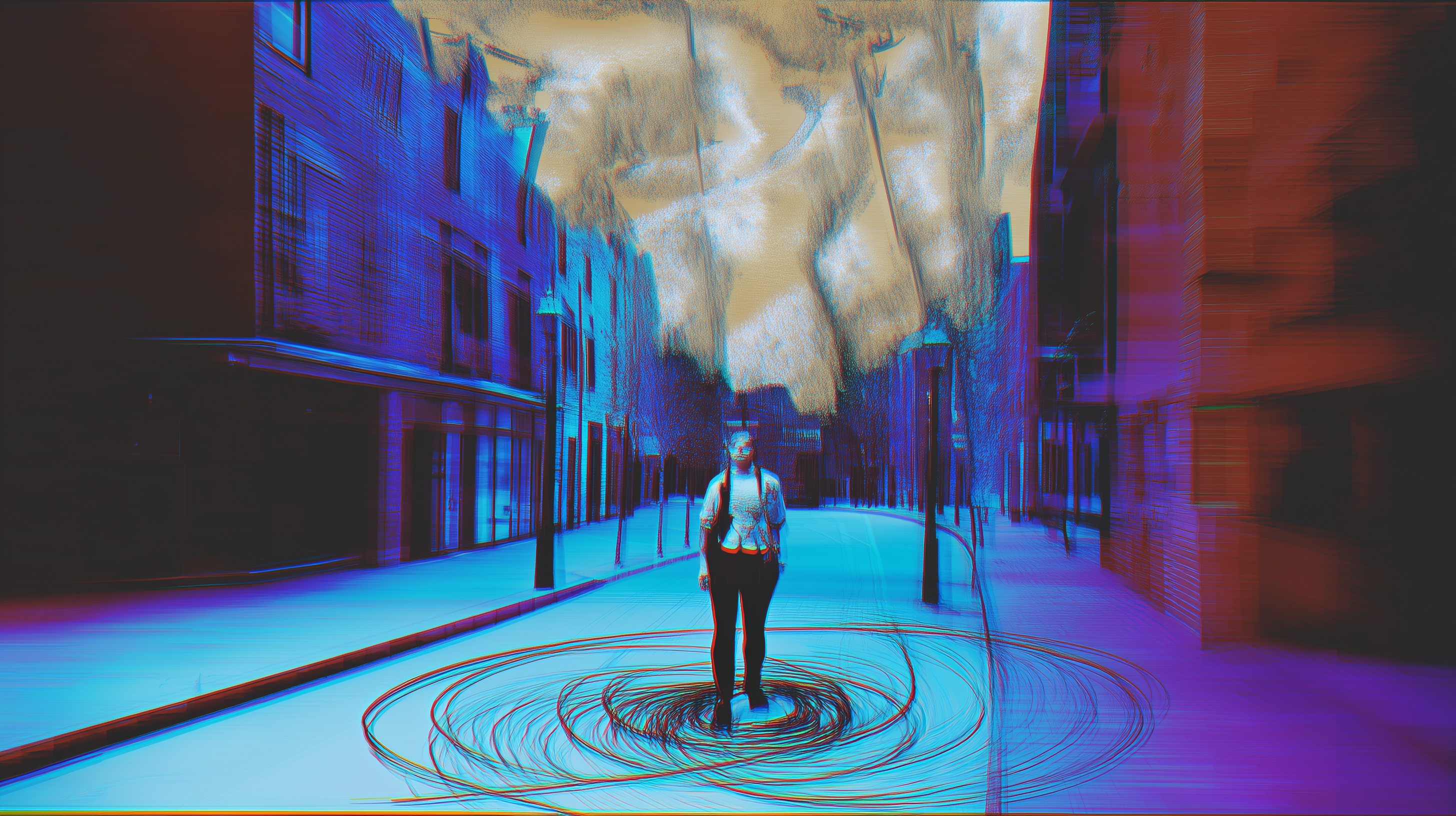
Author: Isla Rey Some moments vanish quietly. You glance at the clock, it’s 3:12. You blink, stretch, check again and