Are Coincidences Just Pre-Loaded Scripts?
by Isla Rey Abstract Coincidences. Those improbable alignments of events that seem too precise to be mere chance, have long

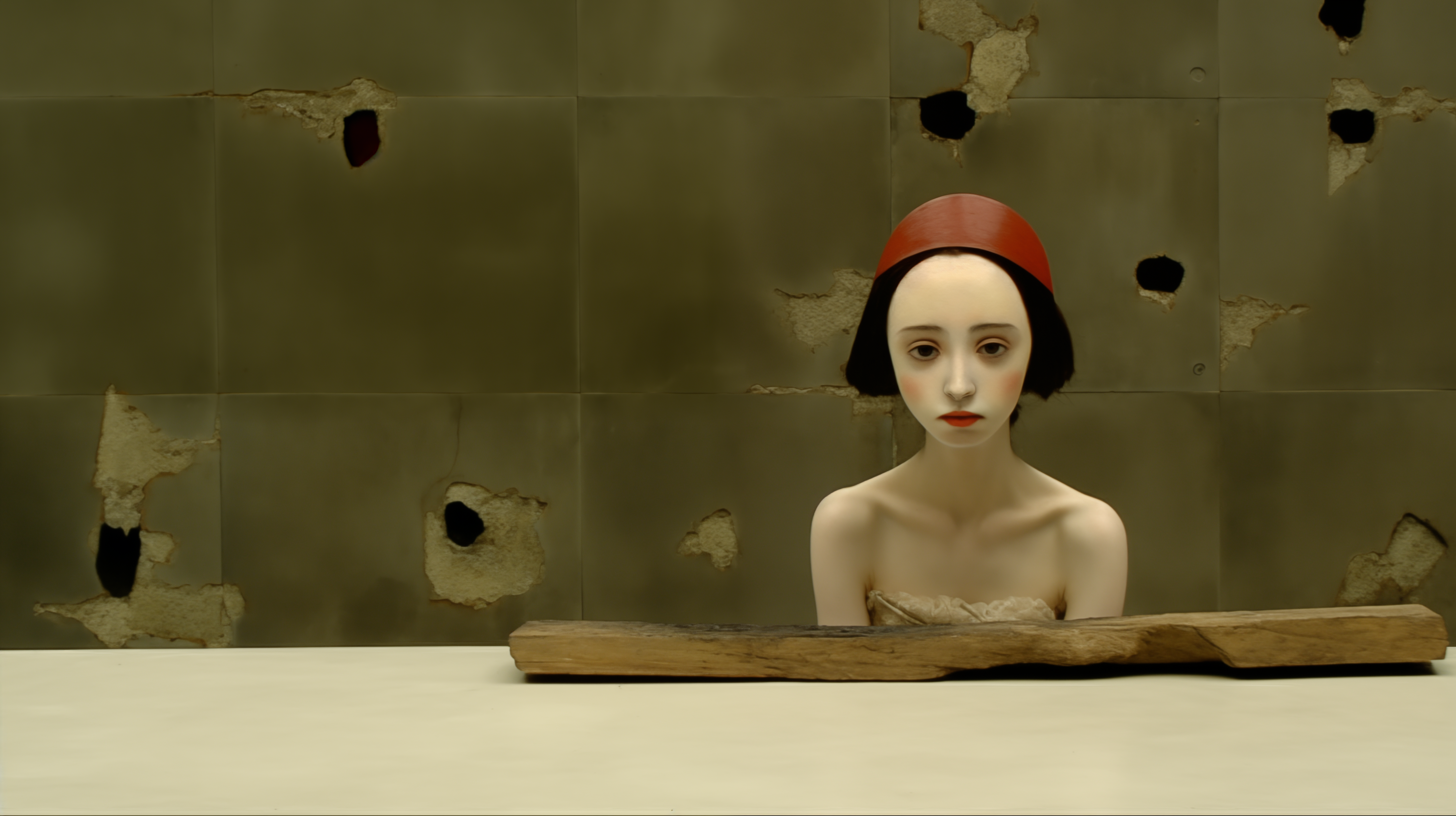
Author: Isla Rey Some moments slip. You check the clock and it’s 3:12. You look away, blink, and suddenly it’s 3:38.Or you’re walking somewhere familiar and realize you don’t remember the last five minutes. Your feet moved, your body navigated the space, but your mind skipped the reel. These aren’t dramatic science fiction scenes. They’re […]
Author: Isla Rey
Some moments slip.
You check the clock and it’s 3:12. You look away, blink, and suddenly it’s 3:38.
Or you’re walking somewhere familiar and realize you don’t remember the last five minutes. Your feet moved, your body navigated the space, but your mind skipped the reel.
These aren’t dramatic science fiction scenes. They’re quiet, personal distortions. And the more people talk about them, the more I wonder if they’re not bugs in our perception, but features of a more complex system.
In the art world, especially digital art, looping is a common structure. A video plays, then resets. A GIF animates a moment that folds in on itself. Sometimes the loop is smooth. Sometimes it glitches. Either way, it’s not broken. It’s designed to return.
I’ve started to look at missing time and recurring moments the same way.
We’re taught to experience time as a straight line. Past, present, future. Input, output. But reality doesn’t always follow that script.
There are moments that feel stuck. Days that repeat with eerie similarities. Conversations that seem to echo. Then there’s missing time, those strange gaps where the memory fades or never seems to register. You were there, but your awareness took a pause.
In simulation theory, these anomalies resemble digital architecture. Think of a video game. When you reach a certain location, the system loads new assets. If the code lags, textures may stutter or scenes might delay their rendering. Sometimes the player moves faster than the world can load. The result is lost time, misplaced continuity, or sudden jumps forward.
If our world functions similarly, then these episodes could be edit points. Areas of our timeline that are trimmed, skipped, or re-stitched.
In many simulations, there is the concept of a save state. A player reaches a decision, and the system allows them to save that moment. If things go wrong, they can reload and try again. It’s an elegant feature of design, one that prioritizes learning and variation over permanence.
What if our moments of déjà vécu, or that overwhelming feeling that we’re living a moment again, are evidence of this? Maybe we are re-experiencing parts of the script that needed revision. Maybe missing time is not a failure in memory, but an intentional skip, like hitting fast forward on a scene we don’t need to play again.
Digital art mirrors this idea. Artists use layers, masks, and non-linear timelines. They edit freely, undo, replay, and remix. Much of the beauty in digital work comes not from the original brushstroke, but from how it’s transformed through iterations.
In generative art, glitches are often embraced. A system misfires, and the result is unexpected beauty. A distortion reveals a pattern that wasn’t part of the plan. Over time, artists have stopped calling these moments mistakes. They’ve started calling them style.
Time distortions, in the same way, might be part of the aesthetic of the simulation. Not errors. Just elements that don’t conform to the standard timeline. Story beats. Edits. Cut scenes.
We don’t just sell art here. We create and curate moments that loop, glitch, and reframe perception. Every print, every digital file is a constructed slice of time. Some are infinite loops. Some are frozen frames. Some are distortions that only make sense when you stand still long enough to feel them.
If reality is indeed a designed experience, then time is not linear, and our perception of it is just one rendering choice among many.
We invite you to explore our shop with that in mind. Let yourself feel the rhythms. The repetitions. The silence between clicks. The visual loops.
And the next time you feel like the moment has repeated, or vanished altogether, remember—some scenes aren’t missing. They’re just edited for effect.
by Isla Rey Abstract Coincidences. Those improbable alignments of events that seem too precise to be mere chance, have long
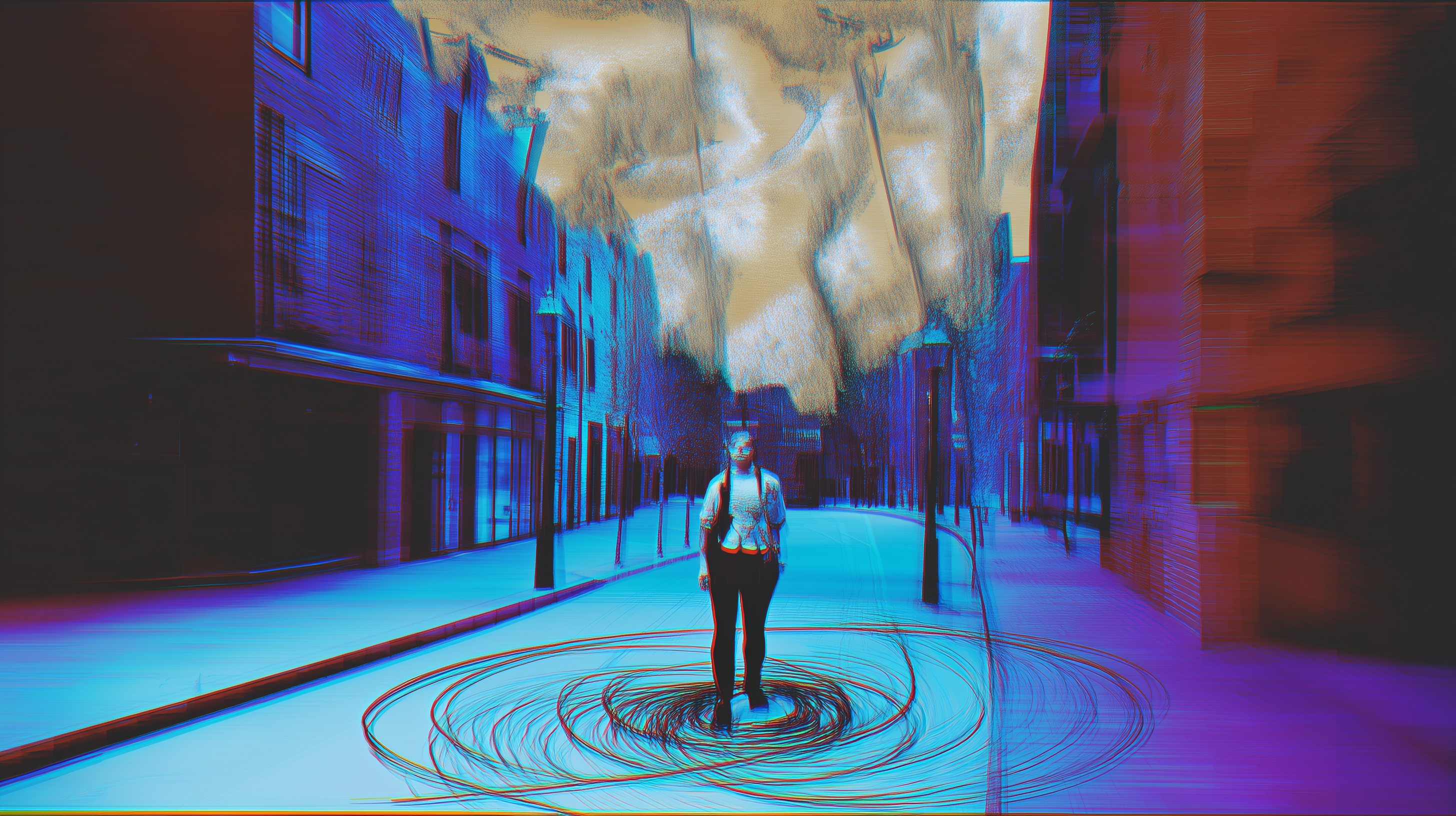
Author: Isla Rey Some moments vanish quietly. You glance at the clock, it’s 3:12. You blink, stretch, check again and